





Unveiling the Biggest Misconceptions About Islam: Origins and Beneficiaries

This comprehensive article delves into the biggest misconceptions about Islam, exploring their origins and identifying who benefits from these distortions. From the false belief that Islam promotes violence to the myth of women’s oppression, the article sheds light on the truth behind these misconceptions using Quranic references and historical context. It also examines how extremist groups, political leaders, media outlets, and Islamophobic organizations exploit these myths for their own gain.

Read More

Why the Quranic Interest-Free Banking Concept is Superior to Capitalism’s Conventional Banking

This detailed article explores why the Quranic interest-free banking concept is superior to capitalism’s conventional banking system. It highlights how Islamic finance principles, such as the prohibition of interest and promotion of risk-sharing and ethical investments, prevent exploitation and promote economic justice. The article also examines the inherent flaws of capitalism, including debt-based financing, wealth inequality, and speculative activities, through the lens of Quranic teachings and modern critiques.

Read More

The Quran’s Accuracy in Describing the Birth Process: A Modern Scientific Perspective

This comprehensive article explores the Quran’s remarkable accuracy in describing the stages of human development, comparing these ancient descriptions with modern scientific knowledge of embryology. It highlights the Quranic verses that detail the process of human creation, including the formation of the sperm drop, clinging clot, chewed lump, and the development of bones and flesh. These descriptions, revealed over 1,400 years ago, align closely with contemporary scientific understanding, demonstrating the Quran’s divine nature and timeless relevance.

Read More

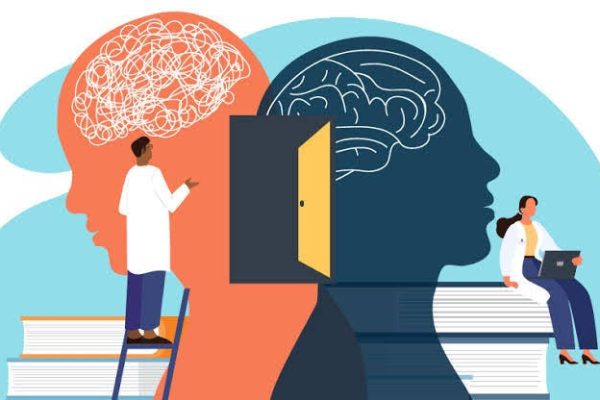
Title: Understanding Mental Health and Well-Being Through Quranic Teachings

This comprehensive article delves into the Quranic perspective on mental health and well-being, exploring how Islamic teachings provide guidance on managing stress, anxiety, and depression. It highlights key Quranic verses, Hadith, and insights from Islamic scholars, emphasizing the importance of spiritual and emotional balance. The discussion also includes modern psychological practices that align with Quranic guidance and initiatives to promote mental health awareness in Muslim communities.

Read More

Interfaith Dialogue and the Quran: Bridging Gaps Between Islam, Christianity, and Judaism

This comprehensive analysis explores the Quran’s approach to interfaith dialogue and its role in fostering understanding between Islam, Christianity, and Judaism. By examining Quranic verses and historical contexts, we uncover how Islamic teachings advocate for respectful engagement and common ground among these Abrahamic faiths, aiming to bridge gaps and promote harmony.

Read More

Quantum Mechanics and Quranic Revelation: Parallels in the Understanding of the Universe

Quantum mechanics, a fundamental theory in physics that describes nature at the smallest scales, often appears to echo concepts found in the Quran. This article explores the fascinating parallels between quantum mechanics and Quranic revelations, delving into how the holy text of Islam anticipates modern scientific discoveries about the nature of reality, matter, and the universe. Through a detailed analysis of Quranic verses and scientific principles, we uncover the profound connections between faith and science.

Read More

The Quran and the Science of Mindfulness: Exploring Spiritual Practices in Modern Psychology

The practice of mindfulness, which has gained significant popularity in modern psychology for its benefits to mental health, finds a profound counterpart in the spiritual teachings of the Quran. This article delves into the Quranic perspective on mindfulness, exploring how its verses encourage a state of awareness and reflection that aligns closely with contemporary mindfulness practices. Through an in-depth analysis of Quranic references and their psychological implications, we uncover the timeless wisdom of the Quran in promoting mental well-being and spiritual growth.

Read More

Quantum Superposition: Unveiling the Mysteries of Multiple Realities

Quantum superposition, a fundamental concept in quantum mechanics, suggests that particles can exist in multiple states simultaneously until they are observed. This principle, famously illustrated by Schrödinger’s Cat thought experiment, challenges our classical understanding of reality. Intriguingly, it also resonates with spiritual and philosophical teachings, offering a unique bridge between modern science and ancient wisdom. By exploring these connections, we can gain deeper insights into the nature of reality and the profound mysteries that govern our universe.

Read More

The Uncertainty Principle: Bridging Quantum Mechanics and Quranic Wisdom

The Uncertainty Principle, formulated by Werner Heisenberg, revolutionized our understanding of the quantum world by highlighting the inherent limitations in measuring certain pairs of physical properties. This principle, which reveals the indeterminacy of subatomic particles, finds intriguing parallels in Quranic teachings that emphasize the limitations of human knowledge and perception. By exploring these connections, we uncover a deeper appreciation for both scientific discovery and spiritual wisdom, illustrating how the Quran and modern science can inform and enrich one another.

Read More

The Concept of Wave-Particle Duality: Bridging Quantum Physics and Quranic Insights

Wave-particle duality, a fundamental concept in quantum physics, describes how particles like electrons and photons exhibit both wave-like and particle-like behavior. This intriguing phenomenon finds fascinating parallels in Quranic verses that speak to the profound and multifaceted nature of creation. By exploring these connections, we uncover a deeper understanding of both scientific principles and spiritual wisdom, illustrating how the Quran and modern science can complement and enrich each other.

Read More