



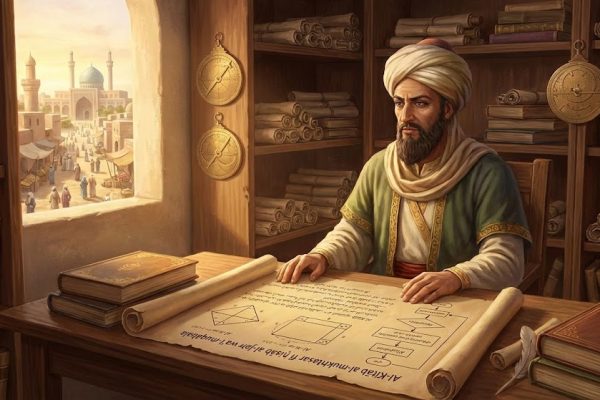
Muhammad ibn Musa al-Khwarizmi: The Muslim Genius Who Invented Algebra and Algorithms
Explore the life and legacy of Al-Khwarizmi, the Muslim scholar who created algebra, algorithms, and the numerical foundations of modern science.
Explore the life and legacy of Al-Khwarizmi, the Muslim scholar who created algebra, algorithms, and the numerical foundations of modern science.
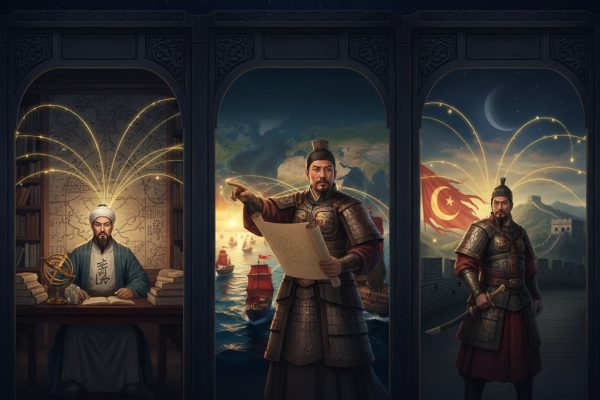
Discover the forgotten Muslim pioneers who helped shape Chinese civilization across the Song, Yuan, Ming, and Qing dynasties. From astronomers like Ma Yize and philosophers like Liu Zhi to legendary generals and navigators such as Chang Yuchun and Zheng He, this article reveals the hidden Muslim contribution to China’s science, military, culture, and global diplomacy.
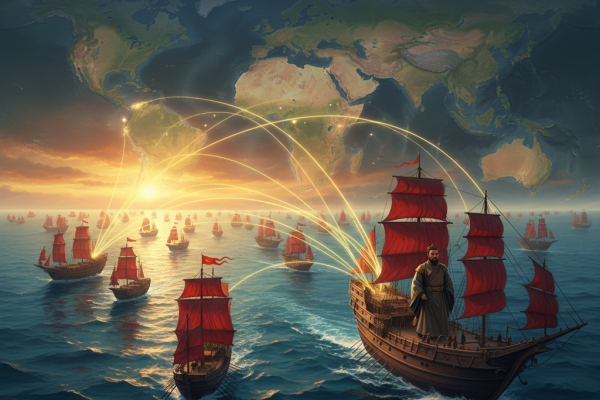
Zheng He, the legendary 15th-century Chinese Muslim admiral, led seven massive ocean expeditions across Asia, Arabia, and Africa long before European explorers set sail. Commanding fleets of over 300 ships, he built bridges of diplomacy, trade, and culture — proving that the oceans could unite humanity instead of dividing it.
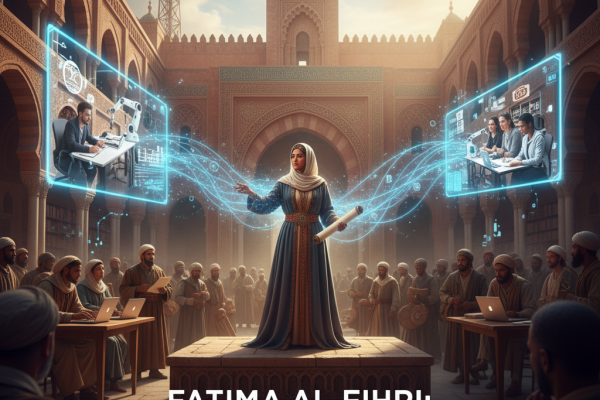
Fatima al-Fihri, a visionary Muslim woman of the 9th century, founded Al-Qarawiyyin University in Fez, Morocco — the oldest continuously operating university in the world. Her legacy revolutionized education, integrating faith, science, and culture, influencing generations of scholars and laying the foundations for modern universities.
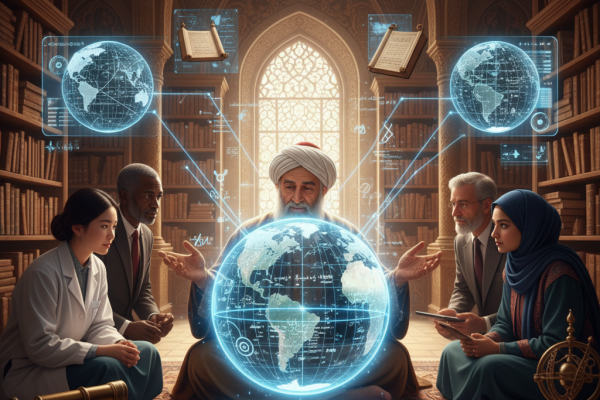
Al-Biruni, the 11th-century polymath from Khwarezm, redefined science and knowledge through his pioneering work in astronomy, geography, and comparative religion. Known as “The Universal Scholar,” he measured the Earth’s radius with stunning accuracy, explored the motion of stars, and built intellectual bridges between cultures and faiths. His legacy continues to inspire the modern world, reminding us that knowledge and faith can coexist in the pursuit of truth.

Al-Jazari, the 12th-century Muslim engineer, was the father of robotics and mechanical engineering. His inventions — from automated water clocks to humanoid machines — revolutionized science centuries before the industrial age, blending art, faith, and innovation into timeless genius

Al-Hajib Al-Mansur (Muhammad ibn Abi Amir) was the undefeated commander of Al-Andalus, who led over 50 successful campaigns against Christian Europe. A brilliant statesman, reformer, and warrior, his death marked the end of Andalusia’s golden age. This biography explores his life, battles, faith, and lasting legacy in Islamic and European history.

A think-tank style analysis of Trump’s policies and their long-term impact on U.S. power. Is Trump America’s Gorbachev, accelerating decline?

Abbas Ibn Firnas, a 9th-century polymath from Andalusia, is celebrated for his groundbreaking attempt at heavier-than-air flight. Using wings made of silk, wood, and feathers, he successfully stayed airborne, marking a significant milestone in the history of aviation. His contributions in engineering, astronomy, and glass manufacturing influenced future generations and laid the foundation for modern aerodynamics and flight science.

Al-Hakam I, Emir of Córdoba from 796 to 822, is known for his significant contributions to the economic prosperity, cultural growth, and intellectual development of Al-Andalus. Under his rule, Córdoba became a leading center of trade, architecture, and learning, setting the foundation for the Golden Age of Islamic Spain.