


1. Introduction
WhatsApp automation systems are widely used for notifications, outreach, and customer engagement. However, sending identical messages repeatedly increases the likelihood of spam detection and account blocking. To mitigate this risk, AI-based message variation techniques can be employed.
Grok, developed by xAI, is a large language model capable of generating contextually accurate and human-like responses. By integrating Grok as an independent AI agent, message variants can be generated dynamically while keeping the message delivery mechanism isolated. This separation follows best practices in software architecture and reduces operational risks.
2. System Architecture Overview
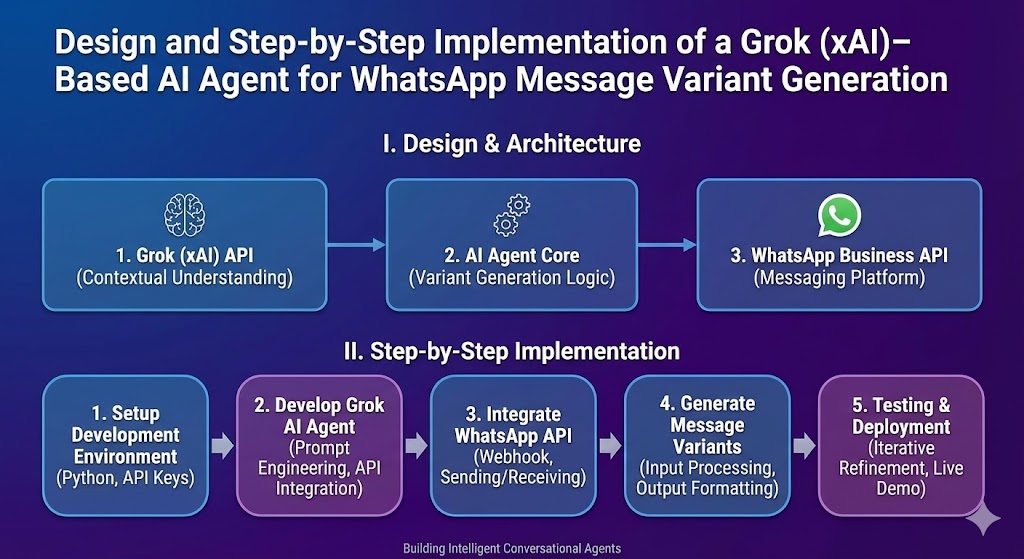
The proposed system consists of five logical layers:
- User Interface / API Layer – Accepts a base message from the user.
- AI Agent Layer (Grok) – Generates multiple message variants.
- Variant Selection Layer – Allows manual or rule-based selection.
- Message Dispatch Layer (Baileys) – Sends messages to WhatsApp.
- Logging and Monitoring Layer – Tracks delivery and errors.
This modular architecture ensures that AI processing does not directly interfere with message delivery.
3. Prerequisites
Before implementation, the following prerequisites must be met:
- Basic knowledge of JavaScript or Python
- Familiarity with REST APIs
- Node.js or Django backend environment
- WhatsApp Baileys library setup
- xAI (Grok) developer account with active billing/credits
4. Obtaining Access to the Grok (xAI) API
Developers must create an account on the xAI developer portal and generate an API key. It is important to note that API access requires an active billing plan or credits. Without credits, API calls will return authorization errors.
Once generated, the API key should be stored securely in environment variables and never exposed in frontend code or logs.
5. Creating a Backend API for the Grok Agent
Rather than calling Grok directly from the WhatsApp automation service, a dedicated backend endpoint should be created. This backend acts as an AI agent service.
5.1 Purpose of the Agent API
- Encapsulate AI logic
- Standardize prompts
- Control output format
- Simplify debugging and maintenance
6. Designing the Prompt for Message Variant Generation
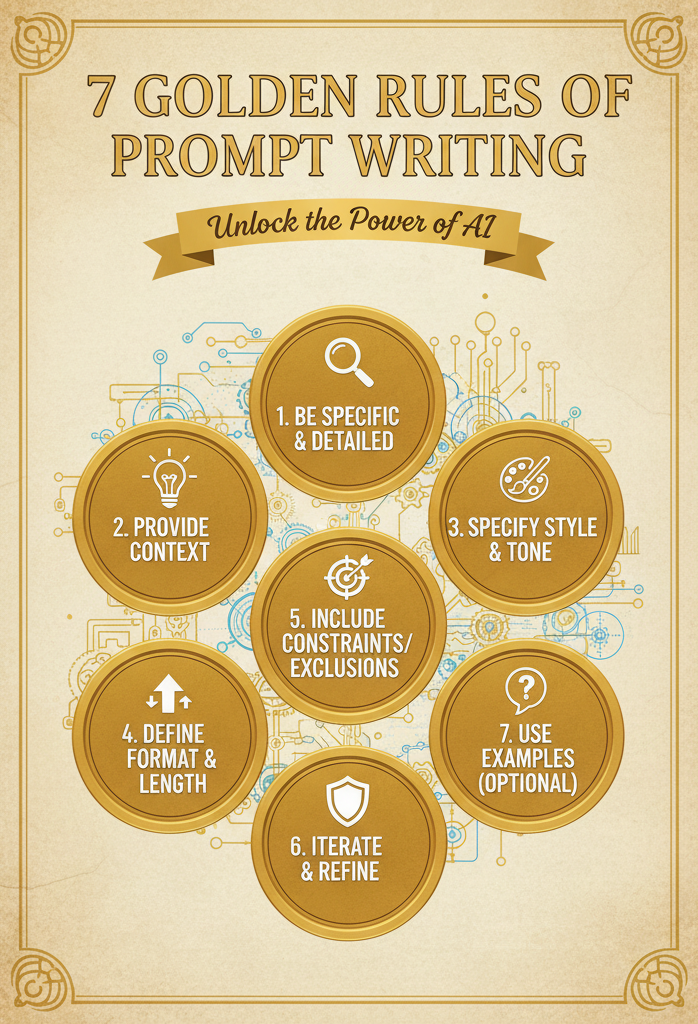
A well-designed prompt is essential for consistent and safe outputs. The following principles should be enforced:
- Preserve the original meaning
- Avoid emojis and promotional language
- Maintain conversational tone
- Produce multiple distinct variants
- Return structured output
Example Prompt Design
Rewrite the following WhatsApp message into multiple natural human-like variants.

Rules:
- Meaning must remain unchanged
- No emojis or promotional words
- Polite and conversational tone
- Simple Urdu mixed with English
- Each variant must differ in wording

Return the result as a JSON array.
This prompt ensures predictable and automation-friendly output.
7. Calling the Grok API
The Grok API is accessed via the official endpoint:
https://api.x.ai/v1/chat/completions
The request includes:
- Model name (e.g., grok-2 or grok-4.1-fast)
- Prompt messages
- Temperature parameter to control creativity
The response contains generated text variants, which should be parsed and validated before further use.
8. Processing and Storing Message Variants
Once the AI response is received:
- Extract individual variants
- Assign internal identifiers (e.g., V1, V2, V3)
- Store variants in memory or a database
- Mark them as “pending approval”
This step ensures traceability and controlled usage.
9. Variant Selection and Mapping
Before sending messages, each variant must be mapped to a recipient number. This can be done using:
- Manual selection (user chooses)
- Round-robin assignment
- Randomized distribution
- Rule-based mapping (e.g., customer type)
This step prevents the same variant from being sent repeatedly.
10. WhatsApp Message Dispatch Using Baileys
Baileys is responsible only for message delivery. It receives:
- Phone number
- Final selected message text
Baileys does not interact with Grok directly, which reduces complexity and risk.
To avoid WhatsApp restrictions:
- Introduce delays between messages
- Limit daily message count
- Avoid identical message repetition
11. Error Handling and Monitoring
Robust error handling is essential. The system should:
- Log API failures
- Handle Grok authorization errors
- Detect WhatsApp disconnects
- Retry failed messages cautiously
Monitoring helps identify performance issues and improves system reliability.
12. Security Considerations
Key security practices include:
- Never logging API keys
- Using environment variables
- Restricting API access to backend services
- Implementing request rate limits
These measures protect both the AI service and WhatsApp accounts.
13. Educational Value and Use Cases
This implementation is suitable for:
- University AI and software engineering projects
- Research on conversational agents
- Practical demonstrations of LLM integration
- Real-world automation systems
Students benefit from understanding both architectural design and applied AI usage.
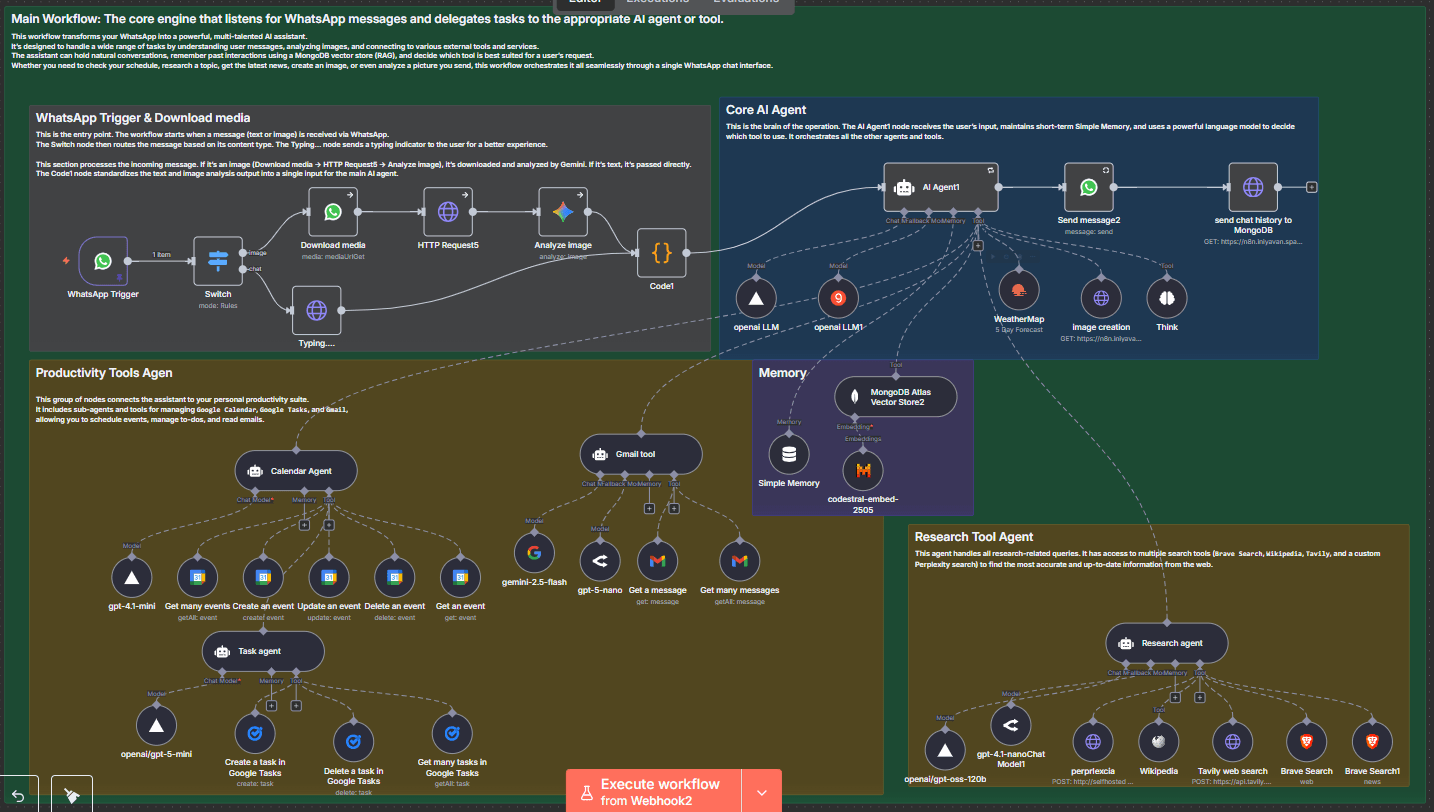
🔹 FLOW CHART: Grok AI Agent for WhatsApp Message Variants
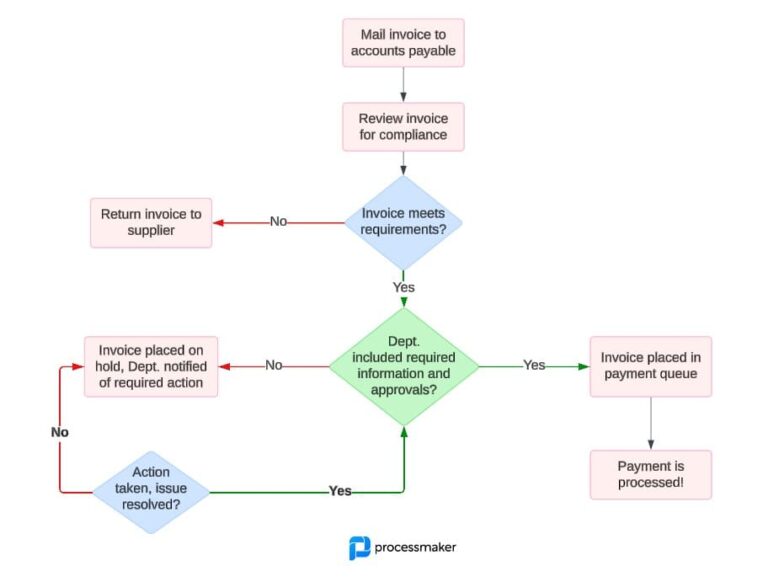
🔹 TEXTUAL FLOW CHART (STEP-BY-STEP LOGIC)
This is the exact logical flow your system follows:
START
  ↓
User enters Base Message
  ↓
Backend API receives message
  ↓
Is Grok API key valid & credits available?
  ├── NO → Return Error (403 / Billing Required)
  └── YES
        ↓
Send prompt to Grok (xAI API)
        ↓
Grok generates multiple message variants
        ↓
Parse & clean variants (JSON)
        ↓
Store variants in backend / memory
        ↓
User selects variant(s)
        ↓
Map selected variants to phone numbers
        ↓
Add messages to sending queue
        ↓
Apply delay & rate limiting
        ↓
Baileys sends WhatsApp message
        ↓
Log delivery status
        ↓
END
🔹 FLOW CHART (ACADEMIC DIAGRAM VERSION)
You may redraw this in draw.io / Visio / PowerPoint exactly as below:
┌─────────────────────┐
│  User / Admin UI    │
└─────────┬───────────┘
          ↓
┌─────────────────────┐
│  Base Message Input │
└─────────┬───────────┘
          ↓
┌─────────────────────┐
│  Backend AI API     │
└─────────┬───────────┘
          ↓
┌─────────────────────┐
│  Grok (xAI) Model   │
│  Variant Generator  │
└─────────┬───────────┘
          ↓
┌─────────────────────┐
│ Variant Processing  │
│ & Approval          │
└─────────┬───────────┘
          ↓
┌─────────────────────┐
│ Number–Variant      │
│ Mapping Logic       │
└─────────┬───────────┘
          ↓
┌─────────────────────┐
│ Queue + Delay       │
│ Rate Limiting       │
└─────────┬───────────┘
          ↓
┌─────────────────────┐
│ WhatsApp Baileys    │
│ Message Sender      │
└─────────┬───────────┘
          ↓
┌─────────────────────┐
│ Logs & Monitoring   │
└─────────────────────┘
🔹 HOW TO USE THIS FLOW CHART (PRACTICAL)
For Students
- Use in AI / Software Engineering assignments
- Add in Methodology section
- Explain separation of AI agent vs delivery system
For Developers
- Use as system blueprint
- Helps in debugging (know exactly where error occurs)
- Easy to scale or replace Grok later
🔹 KEY ACADEMIC CONCEPTS HIGHLIGHTED
- Modular architecture
- Separation of concerns
- AI agent isolation
- Controlled automation
- Ethical & safe AI usage
14. Conclusion
This article presented a structured, step-by-step approach to integrating Grok (xAI) as an AI agent for generating WhatsApp message variants. By separating AI intelligence from message delivery, the system achieves flexibility, safety, and scalability. The approach demonstrates how large language models can be responsibly integrated into real-world communication systems while adhering to software engineering best practices.


