





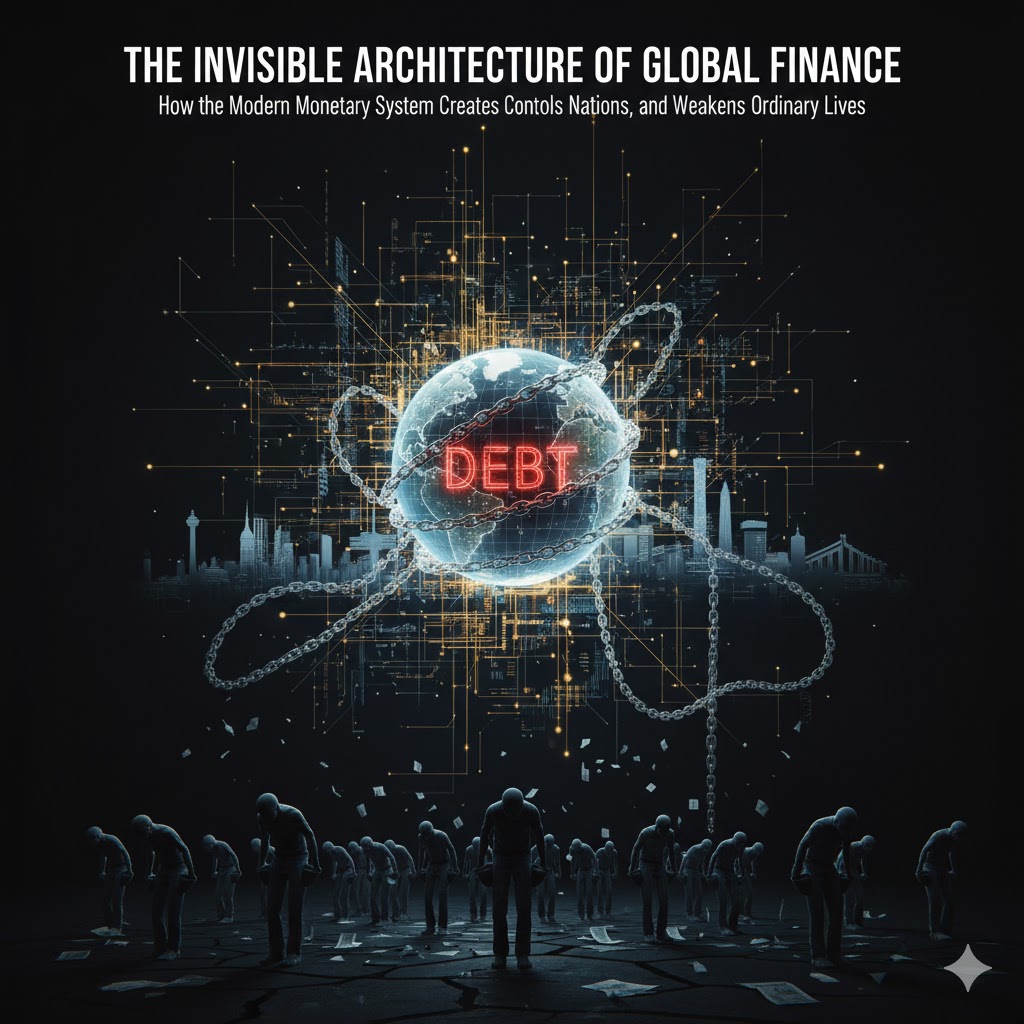
The global monetary system is often described as a neutral, technical framework: a network of central banks, commercial banks, reserve currencies, sovereign bonds, and international institutions that collectively enable trade, investment, and economic coordination. This is the story presented in textbooks, political speeches, and mainstream commentary — a story of stability, rationality, and expert management.
But this is only the surface.
Beneath the visible architecture lies a deeper, more complex structure: a system that determines which nations rise or fall, which governments remain powerful or become helpless, and which classes of society accumulate wealth while others steadily lose economic ground. It is a system built not merely on money, but on debt, hierarchy, and institutional power. It is shaped by actors that most citizens never see, yet whose decisions directly affect every aspect of daily life — wages, housing costs, inflation, taxation, job security, and the value of personal savings.
Most people experience the consequences of this system — but almost no one understands its machinery.
They witness:
- rising prices
- stagnant wages
- unaffordable housing
- growing national debt
- currency devaluation
- banking crises
- and increased economic insecurity
Yet the underlying causes remain hidden behind layers of technical jargon and policy language. The modern financial order relies on this opacity. Its most important mechanisms operate quietly:
- central banks creating money digitally rather than governments printing it
- commercial banks generating credit out of nothing
- sovereign bond markets disciplining elected leaders
- monetary policy redistributing wealth invisibly through inflation
- and global reserve currencies shaping geopolitical power and dependency
These forces do not operate through conspiracy or secret plotting — they operate through institutional incentives, structural advantages, legal design, and historical inertia. They form a system that is not neutral, not inevitable, and not immutable. Rather, it is the result of deliberate choices made over decades by governments, financial actors, and international institutions — choices that have shaped a world in which ordinary people bear the costs while powerful institutions extract the benefits.
Part One of this work aims to expose that hidden architecture.
It traces:
- the historical evolution of modern money
- the transition from gold-backed currency to debt-backed fiat systems
- the rise of central banking power
- the emergence of sovereign debt as the foundation of global finance
- and the silent mechanisms by which inflation, credit creation, and currency hierarchies shape everyday life
The purpose is not to sensationalize, but to illuminate.
Not to assign blame to individuals, but to understand the structure.
Not to critique economics as a subject, but to reveal the political economy of money — the part that rarely appears in public debate.
Because until we understand how the system works, we cannot question why it works this way, or imagine what a better alternative might look like.
This introduction opens the door to a journey through the most important — yet most concealed — machinery of the modern world: the monetary system that governs nations and quietly defines the economic destiny of ordinary human beings.e architecture — the deeper logic of a system that affects every human life.

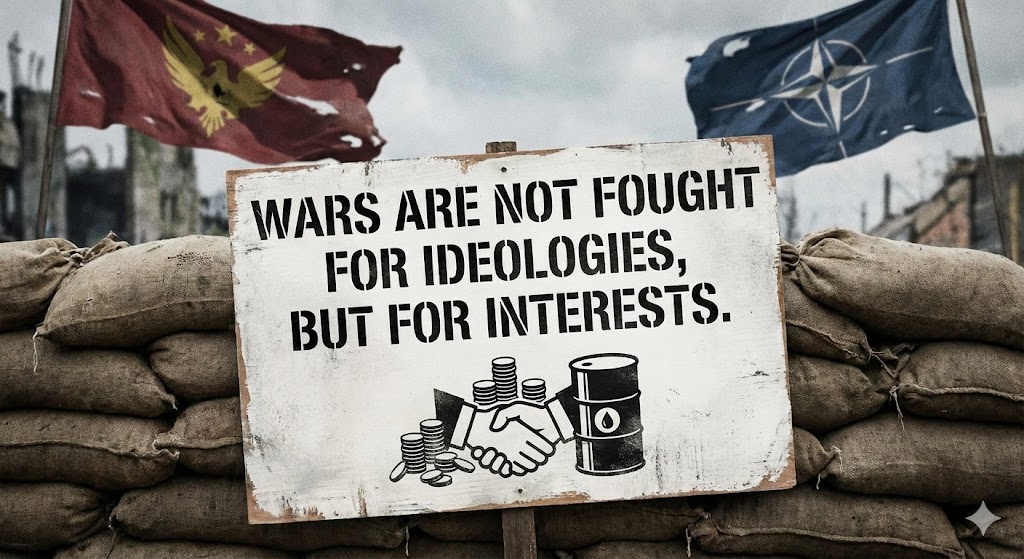
1. The Origins of the Modern Monetary System: From Gold to Debt
For most of human history, money was inseparable from the physical world. It emerged from barter economies and developed into objects that held intrinsic value — items that societies trusted not because a government declared them valuable, but because they possessed real utility, rarity, or universal desirability.
Civilizations used:
- metallic coins forged from precious metals
- cowrie shells and other naturally scarce items
- precious stones valued across continents
- grain receipts and commodity claims used in ancient temples and early markets
- banknotes convertible into gold or silver, representing tangible assets stored in vaults
For thousands of years, the logic was consistent:
Money must be something real — or must be exchangeable for something real.
Gold, silver, and other commodities anchored trust.
This principle shaped global commerce, imperial economies, and international trade routes for centuries.
But in the 20th century, a profound shift occurred — a transformation so fundamental that it redefined not only money, but power itself.
1.1. Bretton Woods and the Rise of the Dollar
In 1944, as World War II drew toward its end, forty-four Allied nations gathered in Bretton Woods, New Hampshire. The world needed stability after years of conflict, currency collapses, and economic depression. What emerged from this conference was a new financial architecture that would dominate global affairs for decades.
The Core Pillars of Bretton Woods
- The U.S. dollar became the central anchor of the world economy.
All major currencies were pegged to the dollar at fixed exchange rates. - The dollar itself was pegged to gold at the legally binding rate of $35 per ounce.
This preserved a link—however thin—between global currency and physical reality. - Two major institutions were created:
- The International Monetary Fund (IMF)
- The World Bank
These were tasked with supporting financial stability, reconstruction, and development.
- The United States emerged as the epicenter of global finance,
largely because it held the majority of the world’s gold reserves after the war.
Under this system:
The world trusted the dollar because America promised it was as good as gold.
It was a hybrid system — modern enough to enable global coordination, yet still grounded in a commodity that had anchored human economies for millennia.
But the arrangement had a flaw: it required the U.S. to maintain enough gold to cover global demand for dollars — a promise that became impossible to uphold.
1.2. The Nixon Shock: Detaching Money from Reality
By the late 1960s, U.S. spending on the Vietnam War, rising imports, and expanding welfare programs caused dollars to flood global markets. Foreign governments began demanding gold in exchange for their dollar reserves, straining America’s gold stock.
On August 15, 1971, President Richard Nixon made a dramatic announcement:
The United States would no longer convert dollars into gold.
This event — known as the Nixon Shock — shattered the last remaining link between currency and tangible value.
From that moment:
- A dollar was no longer a claim on gold
- No longer a claim on any physical commodity
- No longer anchored in anything material
Money became:
- a political construct, defined by government authority
- an institutional instrument, managed by central banks
- a legal obligation, enforced by states
- and a social contract, sustained by global acceptance
This new framework is called the fiat money system — derived from the Latin fiat, meaning “let it be so.”
Fiat money has value because governments declare it valuable —
and because people collectively believe and obey that declaration.
Nothing more.
Nothing less.
1.3. The Consequence: Money Becomes Debt
Once money was no longer tied to gold, it needed a new foundation.
That foundation became debt.
Under the modern fiat system, new money enters the economy through three primary channels:
- Government borrowing
When a government issues bonds (IOUs), central banks and investors buy them — creating new money. - Commercial bank lending
When banks approve loans, they create new deposits from nothing through fractional reserve banking. - Central bank liquidity operations
Central banks inject money into the financial system by buying assets or providing credit to banks.
The result is radical:
Every modern dollar, euro, pound, yen, or yuan is created as debt owed by someone — a government, a corporation, or a household.
Money is no longer a physical asset.
It is a liability in someone’s balance sheet.
A promise to repay.
A claim on future labour.
This architecture defines the entire global financial system:
- The supply of money expands only when debt expands.
- Economic growth depends on continuous borrowing.
- Governments must remain indebted to keep money circulating.
- Banks profit by creating credit.
- Central banks regulate the cycle but cannot escape it.
What began as a shift away from gold became the foundation of a debt-dependent civilization, where money only exists as long as someone — somewhere — owes it.
2. Who Really Creates Money? Central Banks, Not Governments
2.1. The Popular Misconception: “Governments Print Money”
Ask the average citizen, student, or even an educated professional:
“Who creates money?”
The most common answer will be:
“The government prints money.”
This belief is intuitive but entirely incorrect in the modern world.
In contemporary monetary systems:
- Governments spend money
- Governments borrow money
- Governments tax money
But they do not create money in any meaningful operational sense.
Why the misconception persists
- People see political leaders announce budgets, stimulus packages, or public spending and assume the state must be printing the money.
- Currency notes bear the government’s name and emblem, giving the impression of governmental control.
- Historical memories of earlier eras — when kings minted coins and states issued gold-backed notes — confuse the present reality.
In truth, modern money creation is the domain of a different set of institutions:
- Central Banks
- Commercial Banks
- Bond Markets
Governments are merely participants — not creators.
2.2. What Is a Central Bank?
(And why it is not the same as a government)**
A central bank is a specialized public institution responsible for:
- managing the currency
- controlling the money supply
- regulating the banking system
- stabilizing the financial system
- setting interest rates
- acting as lender of last resort
Examples include:
- Federal Reserve (USA)
- European Central Bank (ECB)
- Bank of England
- Bank of Japan
- People’s Bank of China (the closest to direct state control)
Central bank independence
The key fact that most people do not realize:
Most central banks are designed to be independent of elected governments.
Independence means:
- Politicians cannot force them to create money
- Government ministries cannot dictate monetary policy
- Central banks have legal autonomy, technical authority, and institutional protection
This independence was intentionally created to avoid:
- political misuse of money
- inflation through irresponsible spending
- corruption in monetary policy
- short-term populist manipulation
However, this independence also creates a democratic gap:
- One of the most powerful institutions in the world is not directly accountable to voters.
- Its decisions can affect millions, but it is insulated from public pressure.
This separation is central to understanding the real creators of money.
2.3. Central Banks Create Money in Ways That Are Invisible to the Public
Central banks do not “print” money in the literal sense:
- Very little modern money is physical cash.
- Over 90% of all money exists electronically.
Central banks “create” money through institutional mechanisms:
(1) Open Market Operations
The central bank buys government bonds or financial assets.
When it buys bonds:
- It creates new money digitally
- Credits commercial banks’ accounts
- Expands the monetary base
This new money did not exist before the transaction.
(2) Setting Interest Rates
By raising or lowering interest rates, central banks influence:
- how much commercial banks can lend
- how much consumers will borrow
- how much businesses will invest
Low rates → more lending → more money created
High rates → less lending → less money created
Thus, central banks indirectly shape the entire money supply.
(3) Providing Credit to Banks
Central banks lend directly to commercial banks, especially during crises.
These loans are created from nothing, backed only by the central bank’s authority.
(4) Quantitative Easing (QE)
In QE, central banks purchase:
- government bonds
- corporate bonds
- mortgage-backed securities
And inject enormous amounts of digital money into the economy.
Between 2008–2022, central banks created trillions through QE.
This new money flows into:
- financial markets
- asset prices
- government spending
- the banking system
Without a single vote from the public.
2.4. Governments Cannot Create Money Freely — They Must Borrow It
This is the core truth that shocks most people:
Modern governments do not create money.
They borrow money.
Even if a government issues “new currency,” it must do so through the central bank’s balance sheet, not its own.
To raise funds, governments:
(1) Issue Bonds (IOUs)
Governments sell debt to:
- banks
- pension funds
- insurance companies
- foreign investors
- international institutions
- central banks
These buyers lend money to the government in exchange for interest payments.
(2) Borrow from the Central Bank
In some countries, central banks directly purchase new government bonds.
But this is still “borrowing,” not “printing.”
(3) Borrow from Global Markets
If a country needs foreign currency (usually dollars), it must borrow from:
- international banks
- bond markets
- the IMF
- foreign governments
Thus:
Governments are users of money,
not creators of money.
The creators are the institutions lending to them.
2.5. Commercial Banks Create Even More Money Than Central Banks
Surprisingly:
Commercial banks (ordinary banks) create most of the money in the world.
How?
Through a process called fractional reserve banking.
How a bank loan creates new money
Suppose you apply for a loan of $100,000.
The bank does not:
- take money from other people’s deposits
- transfer money from a vault
- move funds from anywhere
Instead, the bank simply creates a deposit in your account:
“Loan approved — here is your balance.”
This is new money created out of nothing.
Why this matters
- When you repay, the money disappears.
- While it exists, it circulates through the economy.
- Banks profit through interest.
Commercial banks create:
- mortgage money
- business loans
- credit card balances
- overdrafts
- auto loans
All of these are new money injections.
Central banks regulate this process, but do not directly control it.
Thus the real money supply is shaped by:
- how much banks want to lend
- how much borrowers want to borrow
- the creditworthiness of the economy
Central banks influence these factors, but do not dictate them fully.
2.6. The Government–Central Bank–Bank Triangle
To understand who creates money, one must understand the triangular system:
(A) Central Banks
Create base money
Control monetary policy
Influence credit conditions
(B) Commercial Banks
Create most of the money through lending
Decide who gets credit
Influence asset prices and inflation
(C) Governments
Borrow money
Spend money
Tax money
But they do not create money.
The true creators are:
- central banks
- commercial banks
- bond markets
Government is the consumer, not the creator.
2.7. Why Governments Accept This System
Why would governments willingly give up the power to create money?
Several reasons:
(1) To prevent political misuse
History is filled with episodes where rulers printed money to fund wars, leading to hyperinflation.
Independent central banks stop the government from:
- printing money before elections
- funding deficits recklessly
- manipulating currency for short-term gain
(2) To build investor confidence
Global financial markets trust:
- independent central banks
- strict financial rules
- predictable monetary policy
This keeps borrowing costs low.
(3) To keep inflation stable
Central banks are seen as technocratic, not political.
(4) To protect the banking system
Commercial banks are powerful political lobbies.
They benefit from controlling credit creation — and governments rarely challenge them.
(5) Because the world economy demands it
If one country returned to government-controlled money printing:
- investors would flee
- currency would collapse
- inflation would soar
- imports would become unaffordable
Thus governments remain locked in the system.
2.8. The Democratic Question: Should Unelected Institutions Control the Money Supply?
This is one of the least discussed — yet most important — questions of modern economics:
Should unelected central bankers have more power over the nation’s economy than elected officials?
Central banks decide:
- interest rates
- liquidity
- inflation targets
- financial regulations
- emergency interventions
Their decisions:
- affect unemployment
- influence housing prices
- shape wages
- determine financial stability
Yet they are:
- not elected
- not publicly accountable
- not subject to democratic oversight
Critics argue that central bank independence:
- removes economic power from citizens
- gives financial elites excessive influence
- prioritizes stability over equality
- protects banks instead of people
Supporters argue that independence:
- protects economies from political corruption
- maintains long-term stability
- prevents inflationary manipulation
Both sides have valid points.
But the central fact remains:
One of the most powerful institutions in society is deliberately insulated from the public.
2.9. The Final Reality: Money Is Created by Institutions, Not Governments
Summarizing the central truth:
1. Central Banks Create Base Money
through digital balance-sheet operations.
2. Commercial Banks Create the Majority of Money
through loans that conjure deposits into existence.
3. Governments Borrow the Money They Spend
from the banking system or bond markets.
4. Bond Markets Control the Cost of Government Borrowing
and can discipline governments by raising interest rates.
5. Citizens use the money but do not influence its creation.
This architecture turns modern money into a:
- political construct
- legal obligation
- digital entry
- debt instrument
- institutional product
It is not neutral.
It is not natural.
It is not government-created.
It is engineered by banks and central banks, under rules designed by international financial institutions.
And this system affects:
- everyday wages
- inflation
- inequality
- housing affordability
- government spending
- national sovereignty
- economic stability
Understanding who creates money is therefore the first step toward understanding:
who truly holds power over modern society.
3. The Sovereign Debt Cycle: Why Every Nation Is Deep in Debt
Among the most striking paradoxes of the modern world is the fact that nearly every nation on Earth is deeply indebted — including the wealthiest. The United States, the European Union, the United Kingdom, Japan, and China — the economic powerhouses that dominate global finance — are simultaneously the world’s largest borrowers. Their debt levels are not anomalies, nor signs of mismanagement, nor temporary imbalances. Rather, they are permanent structural features of the global monetary system itself. The public is often told that governments borrow excessively because politicians overspend or because citizens demand too many social programs. But such explanations miss the deeper truth: the financial system is designed so that governments must be indebted in order for money to exist, markets to function, and economies to grow. Debt is not a flaw of the system; it is its foundation. To understand this reality, we must examine how sovereign debt works, why it expands relentlessly, and how it silently shapes the economic destiny of nations and the daily lives of ordinary citizens.
3. The Sovereign Debt Trap: Why Every Nation Is Perpetually Indebted
3.1. What Is Sovereign Debt? The State’s Foundational Liability
Sovereign debt is the money a national government owes to:
- domestic investors
- foreign investors
- commercial banks
- central banks
- international institutions (IMF, World Bank)
- pension funds and insurance companies
- foreign governments
It is usually issued in the form of government bonds, which are promises to repay with interest after a fixed time.
The public is taught that governments borrow because:
- they lack sufficient tax revenue
- they spend more than they earn
- they run deficits due to emergencies
- politicians are fiscally irresponsible
While these factors may contribute at times, they do not explain why sovereign debt persists even in:
- strong economies
- surplus economies
- wealthy nations
- export-rich nations
- low-tax nations
- high-tax nations
- countries with austerity policies
Debt is not the result of mismanagement.
It is the structural backbone of modern financial architecture.
3.2. The First Pillar of the Debt Trap: Money Supply Requires Government Debt
In a fiat system, governments issue bonds not because they need money, but because the monetary system itself requires government debt to function.
Why?
Because government bonds serve as:
- Safe Assets — financial instruments with guaranteed repayment
- Collateral — used by banks and institutions to secure loans
- Liquidity Tools — used by central banks in open-market operations
- Benchmark Interest Rates — which influence all lending
- Global Reserves — held by central banks worldwide
- Investment Vehicles — for pension funds, corporations, and banks
Without government bonds:
- banks would lack safe collateral
- central banks could not conduct monetary policy
- global reserves would collapse
- financial markets would lose their foundation
- interest rates would be unstable
- liquidity would dry up
The global financial system depends on a constant supply of government debt.
This alone ensures:
Governments can never stop borrowing — the system requires them to remain indebted.
3.3. The Second Pillar: Debt as a Primary Tool for Money Creation
As explained in Section 2:
- When a government issues a bond, new money is created.
- When that bond is purchased, the money supply expands.
- When bonds mature and are renewed, the cycle restarts.
Governments act as “anchors” in a world where most money is created by banks through lending. Without ongoing government borrowing, the economy would shrink, not grow.
Thus:
Sovereign debt is not a sign of weakness — it is the engine of money creation.
This is why even the richest nations remain indebted.
3.4. The Third Pillar: Governments Do Not Control the Money They Use
Governments cannot create money at will. They must:
- issue bonds
- borrow from markets
- borrow from banks
- borrow from their own central bank
- or borrow from foreign investors
Thus the financial hierarchy looks like this:
- Central banks control the money supply
- Commercial banks create most new money through lending
- Bond markets determine borrowing costs
- Governments must operate within the constraints set by these institutions
This is why a sovereign state, theoretically the most powerful entity in society, must:
- pay interest to private banks
- satisfy foreign investors
- maintain market confidence
- adhere to credit rating agencies
- follow bond market expectations
Even though governments can legislate, tax, wage war, and regulate industries — they cannot escape the authority of financial markets.
This is the core of the sovereign debt trap.
3.5. The Fourth Pillar: Continuous Borrowing Prevents Economic Collapse
If a government stopped borrowing:
- The money supply would contract rapidly
- Banks would lose collateral and tighten lending
- Interest rates would spike
- Businesses would face credit shortages
- Financial markets would panic
- Recession or depression would follow
Debt is the lubrication of modern economies.
To stop borrowing is to trigger crisis.
This is why nations with severe austerity measures (cutting spending to reduce debt) often suffer:
- mass unemployment
- recession
- social instability
- currency collapse
- capital flight
Ironically, austerity often increases debt-to-GDP ratios because GDP falls faster than debt.
3.6. The Fifth Pillar: Interest Payments Create a Perpetual Extraction Mechanism
Governments must pay interest on their debt — often using taxpayer money.
This means:
- public wealth flows to investors
- taxes fund financial institutions
- national budgets are constrained by debt servicing
- social programs and infrastructure compete with interest payments
- future generations inherit past obligations
Interest on sovereign debt is one of the largest financial transfers in the world.
For example:
- The United States pays hundreds of billions annually in interest
- The EU collectively pays over a trillion euros a decade
- Japan spends 25–30% of its tax revenue on interest
- Developing nations spend more on debt repayment than on education or healthcare
This creates a permanent transfer of wealth:
From citizens → to bondholders → to financial markets.
This structure is not accidental — it is the design of the global financial system.
3.7. Why Even Rich Nations Cannot Escape Debt
Case Study 1: The United States
The U.S. controls the world’s reserve currency and can print dollars at will.
Yet it has the largest national debt in human history.
Why?
Because:
- the global financial system demands U.S. Treasury bonds as collateral
- global reserves must be held in dollars
- financial markets require a constant supply of “safe assets”
- U.S. debt provides liquidity worldwide
The U.S. borrows because the world needs it to borrow.
Case Study 2: Japan
Japan runs consistent trade surpluses.
It is wealthy, technologically advanced, and highly productive.
Yet its government debt exceeds 250% of GDP.
Why?
Because:
- its ageing population requires high social spending
- its monetary policy relies on stabilizing bond markets
- its deflationary economy requires stimulus
- its financial system needs government bonds as safe assets
Case Study 3: The European Union
The Eurozone is the world’s largest trading bloc.
Yet:
- Greece collapsed under debt
- Italy and Spain face chronic debt issues
- France and Germany maintain large deficits
The Euro’s structure prevents nations from printing money, forcing them to borrow.
Case Study 4: Developing Countries
These nations face:
- volatile currencies
- reliance on foreign capital
- IMF constraints
- high interest rates
- weak domestic bond markets
Their debt becomes a mechanism of dependency.
3.8. Foreign Currency Debt: The Ultimate Trap
When countries borrow in foreign currencies (usually dollars):
- they cannot print the currency to repay
- devaluation makes repayment harder
- their exchange rate becomes hostage to global conditions
- they face sudden stops in capital flows
- they are vulnerable to U.S. interest rate hikes
This creates a cycle of dependency where nations must:
- cut spending
- sell national assets
- devalue currency
- increase taxes
- implement IMF programs
Foreign currency debt is the highest level of financial vulnerability a nation can have.
3.9. Credit Rating Agencies: The Invisible Policemen of the Global System
Agencies like:
- Standard & Poor’s
- Moody’s
- Fitch
act as unelected regulators of global finance.
They can:
- downgrade a country
- raise borrowing costs
- trigger capital flight
- cause debt crises
Their influence is structural, not democratic.
Governments shape fiscal policy with the fear:
“What will the ratings agencies think?”
This gives private corporations enormous power over sovereign states.
3.10. Bond Vigilantes: When Markets Punish Governments
“Bond vigilantes” refer to investors who sell off a country’s bonds when they dislike its policies.
Consequences:
- bond yields spike
- currency plunges
- borrowing becomes expensive
- political pressure builds
- governments reverse policies
This is market discipline — not democratic discipline.
In this system:
Governments fear markets more than they fear voters.
3.11. Why the Sovereign Debt Trap Matters for Ordinary People
The sovereign debt structure affects everyday life through:
(1) Austerity Measures
Cuts to:
- healthcare
- education
- pensions
- public transport
- welfare programs
(2) Higher Taxes
Citizens pay:
- income tax
- sales tax
- fuel tax
- property tax
to service debt — not to improve their lives.
(3) Higher Inflation
Money creation through debt dilutes purchasing power.
(4) Slower Wage Growth
Governments suppress wages to control inflation.
(5) Privatization
Essential services are sold off to private institutions to pay debts.
(6) Reduced Sovereignty
Countries lose control to:
- bond markets
- banks
- IMF/World Bank
- foreign creditors
3.12. The Final Reason Nations Stay Indebted:
The System Is Built on Perpetual Expansion**
Every national debt is:
- someone else’s asset
- collateral for global finance
- a tool for monetary policy
- a foundation for liquidity
- a benchmark for markets
If debts were paid off:
- global finance would collapse
- liquidity would disappear
- safe assets would vanish
- markets would freeze
- central banks would lose control
- credit systems would break down
Thus the system requires:
Perpetual debt.
Perpetual borrowing.
Perpetual expansion.
This is the sovereign debt trap —
not a political failure,
not a temporary imbalance,
but an intrinsic feature of the global monetary machine.
4. The Bond Market: The Most Powerful Force You’ve Never Seen
The global sovereign bond market is larger than:
- all stock markets combined
- all crypto markets multiplied by 100
- the entire global GDP
It is the true governor of nations.
4.1. How the bond market controls governments
When a government sells bonds, investors buy them only if:
- interest rates are attractive
- inflation is low
- fiscal policy seems disciplined
- political stability exists
If any of these fail, investors demand higher interest — increasing the cost of borrowing for the government.
In extreme cases, they stop buying altogether, causing:
- bond crises
- currency collapse
- capital flight
- political crises
Thus governments often tailor policies to please the bond market — not citizens.
4.2. The bond market can force policy decisions
Examples (without naming countries):
- Countries forced to cut pensions under bond pressure
- Social programs slashed after credit-rating downgrades
- Governments collapsed due to sudden bond sell-offs
- Nations pushed into IMF bailouts and strict reforms
Often, citizens think elections decide policy.
In reality, financial markets limit what elected leaders can do.
5. Inflation: The Silent Tax That Hurts Ordinary People Most
Inflation is one of the least understood — and most destructive — features of the monetary system.
Governments frame it as:
- a natural economic trend
- a temporary issue
- a side effect of growth
But structural inflation is a built-in feature of fiat, debt-based money.
5.1. Why inflation exists
Because:
- Money supply must grow to sustain debt
- Governments need inflation to reduce real debt burdens
- Banks profit from lending against inflationary asset prices
- Wages lag behind prices, increasing corporate profit margins
5.2. Who benefits from inflation?
- Governments: their debts shrink in real terms
- Banks: loans become more profitable
- Asset owners: property and stocks rise in nominal value
5.3. Who suffers?
- Salary workers
- Pensioners
- Renters
- Small savers
While the wealthy own inflation-protected assets, ordinary people own:
- wages
- cash
- time
Inflation silently extracts value from these.
It is the hidden tax no government needs to vote on.
6. The Financial Elite: How Power Concentrates Without Conspiracy
There is no secret room where people plan global finance.
But the system produces concentration of power automatically.
6.1. Who holds the most financial influence?
- Central banks
- Large commercial banks (JPMorgan, Citi, HSBC, etc.)
- Investment giants (BlackRock, Vanguard, State Street)
- Multinational corporations
- IMF, World Bank, BIS
- Commodity traders and energy giants
These actors:
- manage trillions of dollars
- can move markets with a single statement
- influence national policies
- shape regulatory frameworks
- control corporate governance
- lobby political systems
There is no conspiracy —
this is simply how power behaves in a system designed around financial leverage.
7. Dollar Dominance and Its Global Consequences
The U.S. dollar is not only a currency — it is the backbone of international power.
7.1. Why the dollar dominates
Because:
- Global trade uses dollars
- Oil contracts require dollars
- Global banks clear payments through U.S. channels
- The U.S. has strong financial institutions
- Treasuries are seen as the “safest asset”
7.2. How this gives the U.S. unique benefits
- It can print the world’s reserve currency.
- It can borrow cheaply and indefinitely.
- It can sanction other nations through dollar-clearing restrictions.
- It enjoys global demand for its financial assets.
- It exports inflation to the rest of the world.
7.3. The burden on ordinary people in dollar-dependent countries
When the U.S. raises interest rates:
- capital flees developing economies
- their currencies fall
- inflation spikes
- imported goods become expensive
- debt servicing costs explode
Millions suffer because of a decision made in Washington.
8. The Digital Shift: CBDCs and the Future of Money
Central Bank Digital Currencies (CBDCs) are being tested worldwide.
They will change:
- how money moves
- how transactions are monitored
- how monetary policy is executed
- how governments enforce taxes
- how capital controls operate
8.1. Benefits for states
- Perfect visibility over transactions
- Instant tax collection
- Direct stimulus to citizens
- Reduced banking intermediation
- Harder for money laundering/crime
8.2. Risks for citizens
- Loss of privacy
- Programmable money (restrictions on spending)
- Potential negative interest rates
- Blacklisting or freezing of accounts
- Total dependence on digital infrastructure
CBDCs could empower governments and financial institutions far beyond anything in the past.
9. The BRICS Challenge: A New Financial Bloc
BRICS nations (expanded) are building:
- alternative payment networks
- local-currency trade
- reserve diversification
- commodity-backed settlement systems
This challenges:
- dollar dominance
- SWIFT’s centrality
- Western financial leverage
While not replacing the dollar soon, BRICS reduces dependency and creates a second financial pole.
10. How the System Hurts Ordinary People — the Mechanisms of Economic Extraction
Finally, we must connect the system to human lives.
Here are the main channels of damage:
10.1. Wage Stagnation vs. Asset Inflation
Productivity rises.
Corporate profits rise.
Asset prices rise.
But wages stagnate.
The system rewards capital, not labour.
10.2. Housing Becomes Unaffordable
Because:
- low interest rates inflated house prices
- investors buy real estate as financial assets
- central banks distort prices through liquidity
Ordinary families compete with hedge funds in the housing market.
They lose.
10.3. Debt Chains
People borrow for:
- education
- healthcare
- housing
- living expenses
Debt creates dependency — just like national debt.
10.4. Inflation Tax
As wages lag inflation:
- savings erode
- purchasing power collapses
- financial stress increases
The average household becomes poorer even if nominal income rises.
10.5. Market-Driven Austerity
When bond markets panic:
- governments cut social spending
- privatize services
- reduce pensions
- increase taxes
Ordinary people pay for market stability they never asked for.
10.6. Job Insecurity in a Financialized Economy
Corporations maximize shareholder value, not employment stability.
Workers become:
- replaceable
- temporary
- globally outsourced
Financialization converts human labour into a variable cost.
Conclusion: The Architecture Behind Everyday Suffering
The global monetary system is a complex machine designed to:
- expand debt
- preserve capital
- protect investors
- discipline governments
- reward financial actors
- and maintain currency hierarchies
But it is not designed to maximize well-being for ordinary people.
It is designed to maintain stability and capital accumulation — even when that stability:
- prevents governments from helping citizens
- forces austerity
- raises living costs
- undermines wages
- inflates housing
- and normalizes perpetual debt
Understanding this architecture is the first step to challenging it.
Without knowledge, citizens are mere participants in a system built above them — and often against them.


